 >
>
O freio lingual é uma membrana fina que liga a língua ao assoalho da cavidade oral. When a frenulum is present, the term ankyloglossia may be used — a word derived from the Greek 'agkilos' (deformed or curved) and 'glossa' (tongue).
Embryological formation and the lingual frenulum
During intra-uterine life, the tongue is initially attached to the floor of the mouth. Around the 12th week of gestation, a natural process called apoptosis separates the tongue, partially or fully destroying the membrane connecting the tongue to the floor of the mouth. If this process is incomplete, a lingual frenulum may persist and limit tongue movements.
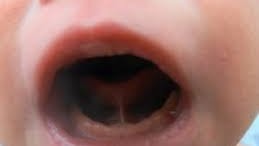

"Imagine your shoes are tied together by their laces."
You could still walk, or even trot if the tie is not too tight, but it would be much more difficult than moving freely. The same applies to a restrictive tongue-tie: the tongue can move or even protrude slightly, but its freedom of movement is limited.
This constraint can have repercussions on the functions in which the tongue participates, such as swallowing (deglutition), chewing (mastication) or speaking (language), among others.
A restrictive lingual frenulum, as defined by the IATP ("International Affiliation of Tongue Tie Professionals"), is an embryological frenulum located at the midline under the tongue, restricting its normal mobility.
This frenulum can be more or less restrictive depending on its shape and size. It is possible to have a frenulum without symptoms (non-restrictive) or, conversely, a frenulum causing dysfunction (restrictive).
A tongue with a restrictive frenulum functions like shoes tied together by their laces: movement is possible but limited, making certain actions much more difficult.